OptiVize is an in-office eyelid procedure offered at Dry Eye Rescue Clinic. It starts with an eyelid and gland evaluation, and Dr. Beck recommends it when it fits your care plan.
What we look at along the eyelids
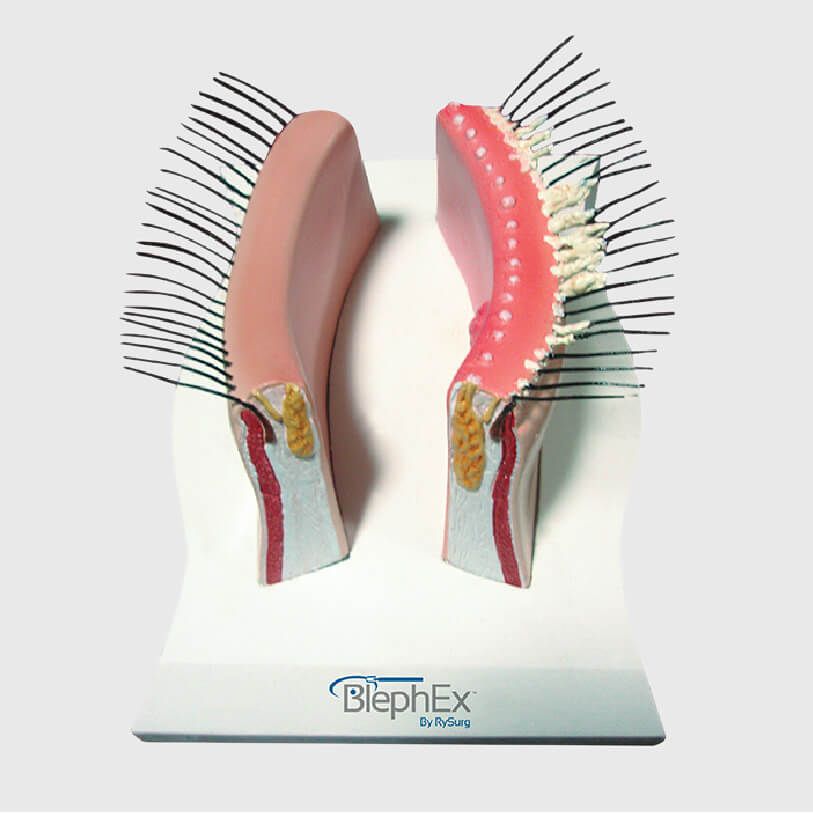
Biofilm is a layer bacteria leave along the edge of the eyelids, much like plaque on teeth.
The meibomian glands, which add oil to your tears, open along that same edge. That is why we examine the lid margins and glands closely at your evaluation.
Where OptiVize Fits
Dry eye care often combines several approaches, including heat-based treatments, light-based treatments and in-office eyelid procedures. OptiVize is one of the in-office options at our clinic, and Dr. Beck recommends a plan based on what your evaluation shows.
GENTLE & COMFORTABLE
How the OptiVize Procedure Works
A three-part, in-office procedure. About 10–15 minutes total.
1. Surface Cleaning
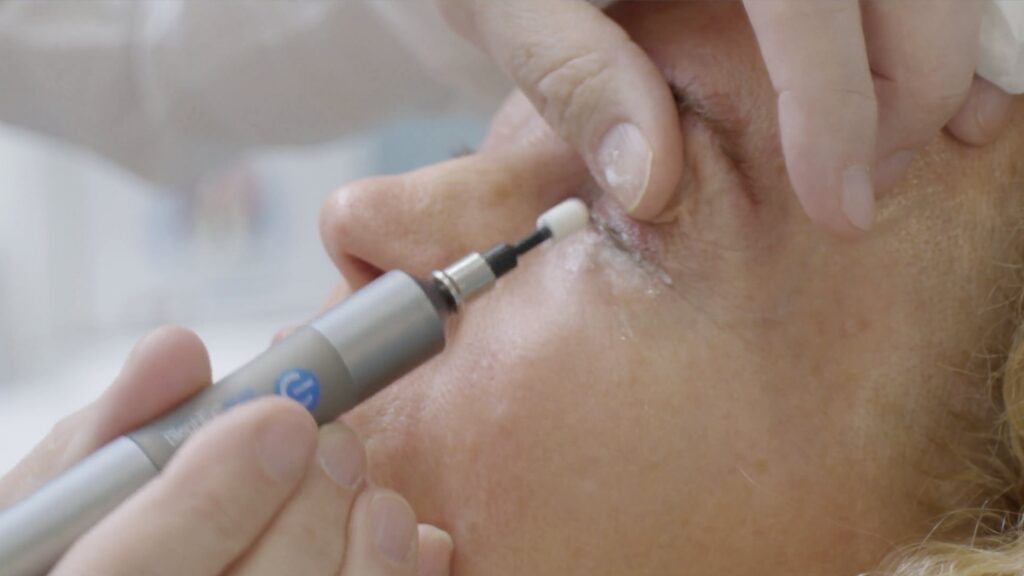
A soft rotating tip soaked in cleaning solution cleans along the edges of all four eyelids.
2. Applicator Step
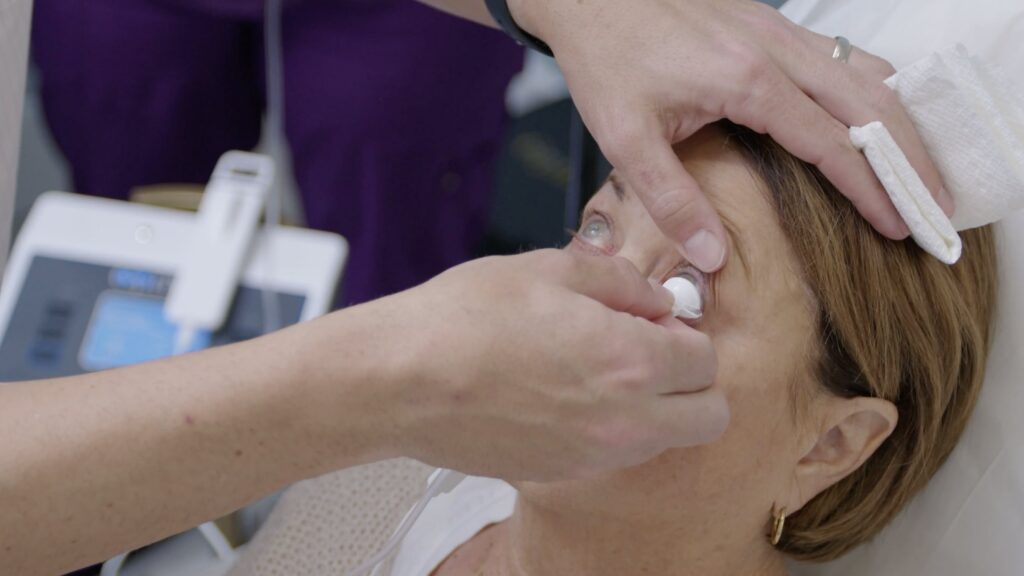
After numbing drops for comfort, a small applicator delivers gentle electrical pulses, similar to a TENS unit, along the eyelids. A steady saline drip keeps you comfortable, and intensity increases only with your feedback.
3. Warming Step
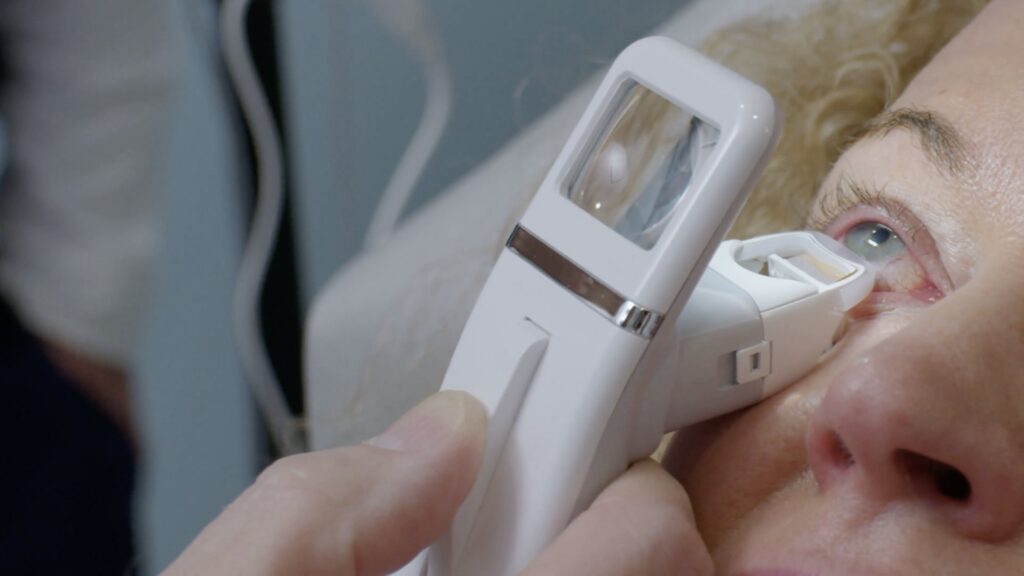
Gentle warmth and light pressure are applied along the eyelids to finish the procedure.
What Happens at Your Evaluation
We examine your eyelids, lash line, gland function and tear film before recommending any procedure.
Numbing drops and a lubricating saline drip keep you comfortable throughout, and the gentle pulses are increased gradually based on your feedback. You may notice mild eyelid tenderness afterward.
A regular eyelid cleaning works along the eyelid margins. OptiVize is a separate, multi-step in-office procedure that adds the applicator and warming steps. Dr. Beck can explain which option fits you.
Don’t let dry eyes keep you from living your best life. Come see Dr. Beck Today.
Dr. Ryan Beck is a nationally recognized specialist in dry eye and ocular surface disease. As the Medical Director of DryEye Rescue Clinic, he has helped thousands of patients find lasting relief through personalized treatment plans and advanced in-office therapies.
Patients trust Dr. Beck not only for his expertise, but for his commitment to listening, educating, and delivering real results. His leadership is what makes our clinic truly one of a kind.